How to Beat With Gunkan Suship
Matchup theory for hand traps, board breakers, and role selection
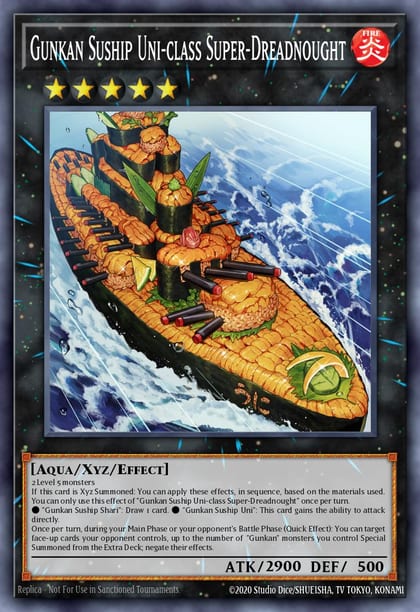
Gunkan Suship matchups are won in deck building before they are won in duels. The archetype presents a narrow threat profile: one or two interruptions on turn one, explosive battle phase on turn two, and grind advantage through Gunkan Suship Catch-of-the-Day searches when games slow down. Opponents who know that script hand-trap the Normal Summon, negate the Xyz climb, or set floodgates that prevent equips. Pilots who memorize only going-first lines lose half their bracket before side decking begins. This guide explains how Suship wins and loses against common Master Duel strategies, when Gunkan Suship Uni removal matters more than Shirauo-class Light Carrier negates, and how to side into favorable roles using the competitive build as a baseline.
Going first versus going second
Role selection is the highest-leverage matchup skill for rogue Suship. Going first, your goal is Shirauo-class Light Carrier plus set Catch plus hand traps — a board that forces combo decks to extend into negates while preserving your grave for yard recursion. Going second, your goal is OTK or near-lethal through going-second routes after clearing one disruption. Many losses come from forcing the wrong plan: attempting OTK into three negates, or passing with Carrier against a deck that ignores monster effects.
Use the Master Duel coin flip wisely. When forced second against floodgate decks, side in board breakers aggressively and trim passive traps. When forced first against OTK-dedicated strategies, prioritize Shirauo toppings and double Carrier extra deck slots if your list allows.
Hand trap matchups
Ash Blossom & Joyous Spring is Suship’s public enemy number one because Shari’s deck special summon is a search effect Ash can hit. Play around Ash by holding Shari Red or Normal Monster support from support engines — Rescue Rabbit and Unexpected Dai summon without triggering Ash on Shari’s effect if sequenced correctly. If Ash hits Shari’s special summon, you still have your Normal Summon; use it on Red or a second Shari if drawn.
Infinite Impermanence on Carrier or Dreadnought hurts but rarely ends the duel if Catch was set. Impermanence on Shari before equip is worse — you lose overlay material and toppings in hand may dead draw. Chain hand traps to force Imperm early when possible, then rebuild with yard grave attach next turn.
Effect Veiler and Nibiru, the Primal Being punish over-extension. Suship’s fix is discipline: overlay with two bodies, not four. Going second OTK lines should use the minimum monsters required for lethal — extra bodies invite Nibiru tokens you cannot clear.
Droll & Lock Bird shuts off Catch searches and Shari deck specials in the same turn. When Droll is live, rely on pre-activated Sushipyard equips and Normal Summon-only lines. Side your own Droll for mirror and search-heavy matchups.
Board breakers and going second
Lightning Storm, Evenly Matched, and Dark Ruler No More define going-second Suship matchups in 2026. Without at least two main or side deck breakers, you cannot OTK through modern boards. The competitive build sides three Evenly or Storm equivalents — mirror that pattern.
Sequence breakers before committing Shari when possible. Clearing a Infinite Impermanence set card before summoning saves your Xyz climb. If breaker resolves and opponent has no follow-up, normal Shari immediately — delay invites second-layer traps.
Floodgate and stun matchups
Decks that rely on Skill Drain, Vanity’s Emptiness, Majesty’s Fiend, or macro-style grave hate stress Suship differently than combo decks. You cannot negate twelve effects — you must force battle phase. Equip Gunkan Suship Ikura, overlay into Ikura-class Dreadnought, and attack repeatedly. Floodgate pilots often lack large ATK monsters; rogue OTK math steals games here.
Gunkan Suship Uni matters enormously in stun matchups because destruction effects remove problem back row without triggering monster-effect negates. When Uni destroys the floodgate, follow with Ikura OTK or grind with Catch. If equips are blocked, use Uni-class Dreadnought’s battle phase instead of Carrier’s negate — stun decks rarely respect Carrier but fear damage.
When Uni negate matters
Uni is often mislabeled as “removal only.” In matchups against decks that summon once and pass — Eldlich-style strategies, certain Runick variants, passive control — Uni’s once-per-turn destruction is your primary interaction. Carrier’s omni-negate is stronger against combo decks that chain monster effects; Uni’s destruction is stronger against permanents and set cards.
Going second into a single large monster plus set card, equip Uni before overlay, destroy the set card, overlay into Uni Dreadnought, battle the large monster, then direct attack if ATK permits. This line appears in core combo lines as the Uni-first variant. Skipping Uni for Ikura into a Mirror Force set loses the duel.
Combo engine matchups
Against multi-negate combo decks — snakes, branded variants, Ryzeal mirrors — Suship wins by forcing them to use interruptions on Normal Summons, then punishing recovery turns with OTK. You will lose game one often; side decking fixes game two and three. Side out slow traps, side in Droll and Nibiru, keep Catch engine intact.
Hybrid Suship lists fare better here because secondary engines absorb hand traps meant for Shari. If pure matchups feel hopeless at your rank, read the tier list hub and consider Ryzeal hybrid or Primite Gunkan before abandoning the archetype.
Mirror matchups
Suship mirrors reward knowledge of card tiers and speed. Going first Carrier plus Catch beats slow second hands. Going second, the pilot who clears the opponent’s Carrier first usually wins — use Uni destruction or battle tricks. Side out redundant hand traps both players ignore; side in Called by the Grave for negate protection on your OTK turn.
Matchup checklist before ranked sessions
Identify the top three decks in your bracket from replay data or community posts. For each, write one sentence: go first plan, go second plan, side in cards. If you cannot answer all three, drill combos until you can. Matchup guides are useless without muscle memory — this page supplies theory; the combo library supplies execution.
Long-game grind matchups
Control mirrors that neither side OTKs devolve into Catch search wars. Sushipyard grave attach keeps toppings flowing; opponents without recursion fall behind. Preserve Catch for turns when you summon — never search blindly into Droll. Track opponent grave hate; if banish removal is live, play slower and force them to use it on Shari Red instead of yard.
Frequently Asked Questions
Quick answers duelist ask most often.
What is Suship's worst matchup type?
Heavy macro or banish strategies that shut off grave recursion and multiple omni-negates that prevent both summon and battle phase. Side board breakers and consider hybrid engines from the [tier list](/tier-list/).
Should I go first or second with Suship?
Both are viable — choose based on opponent deck, not habit. Combo decks favor going second with OTK; stun and control favor going first with Carrier. Practice both on the [combos hub](/combos/).
When do I prioritize Uni over Shirauo?
Going second into back row and single large monsters. Going first into combo decks, prioritize Shirauo and Carrier negates instead.
How many hand traps should I main in matchup-heavy metas?
Fifteen is common in 2026 rogue lists. Trim a topping before trimming a hand trap — see the [competitive build](/builds/competitive/) for baseline counts.